


WEBSITE DESIGN & CRO

Design a website built for credibility and lead generation.

A website in trust-driven industries has a specific job to do. It must communicate professionalism, reduce uncertainty, and guide the right people toward making an enquiry.

Website design and conversion rate optimisation (CRO) focuses on how information is presented, how expertise is communicated, and how journeys are shaped to support a confident decision in doing business. Every element is considered, from structure and language to flow and calls to action, so your site supports real commitment rather than passive engagement.

If you’re considering a website refresh, or you’re unsure whether your current site is doing the work it should, get in touch.

Let's get started


Trusted by professional services

WHY

Turn credibility into a digital storefront

Many professional service firms deliver excellent work, yet their websites fail to translate that credibility into enquiries. Visitors arrive interested but leave uncertain. Not because the firm lacks expertise, but because the website makes it hard to assess risk, compare services, or understand where to go next.

In regulated markets, decisions are rarely impulsive. People read carefully. They look for clarity, accuracy, and signals that they are in safe hands. If key information is buried, service offerings are vague, or the journey feels unclear, confidence drops quickly.

Website design and CRO addresses this by focusing on how credibility is communicated and removing friction from the path to contact. The result is a website that works as a decision-support tool: helping the right people understand your offer, trust your expertise, and take the next step with confidence.

Professional looking at website design

HOW

Website design that supports traffic conversion

Website design and conversion rate optimisation focuses on how your digital presence is planned, built, and refined to support real decision-making by your prospective clients. This work brings together structure, content, design, and performance so your website reflects professional standards and actively supports lead generation, not just engagement.

Plan around user needs and outcomes

Website planning, wire framing, and UX architecture

This covers early-stage planning, wireframing, and UX architecture. Pages, journeys, and content hierarchy are mapped out in advance, so the site is built around user needs, business priorities, and clear outcomes rather than assumptions or templates.

Design and build a credible digital presence

Website design and development

This covers the design and build of your website using WordPress, ensuring flexibility, performance, and long-term manageability. The focus is on clarity, usability, and professionalism, so the site reflects the high standards you provide and can evolve as your business and requirements change.

Write website copy with credibility

Website and landing page copywriting

This shapes how services are explained across the site. Copy is written to be clear, accurate, and appropriate for regulated markets, helping users understand what you offer, who it’s for, and what to do next without confusion or friction.

Design customer journeys that guide action

Customer journey mapping

This focuses on how users move through the site, from first visit to enquiry. Journeys are structured to anticipate questions, surface reassurance at the right moments, and support progression toward meaningful action.

Support meaningful conversion

Conversion Rate Optimisation (CRO)

This covers conversion rate optimisation. Calls to action, forms, page flow, trust signals, and layout are refined to activate lead generation with confidence. The focus is on helping the right people take the next step once they feel informed, reassured, and ready to commit interest.

Ensure accessibility, compliance, and usability standards

Accessibility, GDPR, and industry regulator compliance

This considers accessibility requirements, GDPR considerations, and the best practices set by industry regulators. The aim is to reduce risk, improve usability for all visitors, and ensure the site meets modern digital expectations.

Build an SEO-ready foundation

SEO-optimised structure and metadata

Site structure, metadata, and page hierarchy are designed to support search visibility from the outset, ensuring future SEO and content work can be layered on effectively rather than retrofitted later.

Maintain website security and updates

Website maintenance and ongoing security

Ongoing website maintenance is available as an optional service. This includes security monitoring, software and plugin updates, and minor content edits, helping ensure your site remains secure, up to date, and running smoothly without becoming a burden on your team.

CASE STUDIES

Website design and CRO in practice

A website only delivers value when it supports confident decision making. These case studies show how improved structure, content, and journeys have strengthened credibility, improved enquiry quality, and supported growth in trust-driven industries.

Using website structure to unlock local market share and international instructions

£300k international case secured

Leonard Solicitors LLP opened a new branch in Bournemouth, but the website was built around a single-location model. It couldn’t signal local relevance in a competitive market, and it needed stronger service depth to support both regional growth and higher-value national enquiries.

Strategic focus

  • Sitemap restructure and conversion rate optimisation
  • New location-based landing, service and contact pages
  • Establishing local credibility signals

Outcome

The restructure protected performance in Southampton while building a dedicated digital footprint for Bournemouth. The Bournemouth office averaged 4–5 enquiries per week via the contact form alone (with additional enquiries generated by phone).

At the same time, the strengthened national service architecture supported specialist visibility and helped generate a high-value national instruction.

Building a credible, compliant website for a regulated mental health business

52 qualified enquiries in 10 weeks | 2.8K organic sessions | 1.1K contact page views

Crystal Pathways’ website had been created in-house in the early stages of the organisation and didn’t reflect the clinical credibility, structure, or trust signals expected in regulated healthcare. The content also attracted irrelevant searches, which diluted visibility for their evidence-based services.

Strategic focus

  • Website restructuring and customer journey mapping
  • Unique Value Proposition development
  • Conversion Rate Optimisation

Outcome

The new website established a calm, credible digital presence that improved service understanding and supported confident decision-making.

Since launch (mid-August 2025), it generated 52 qualified enquiries in 10 weeks, showing how compliant structure, messaging, and UX can drive trust-led conversion in healthcare.

Repositioning a legal aid firm for private client growth through content expansion & buyer journeys

164% turnover growth | 12 qualified enquiries/day | 34% increase in matter openings

Leonard Solicitors LLP was historically known for Legal Aid work. After a rebrand and new website, their digital presence still didn’t reflect the firm’s expanding private client and business services, and it was difficult for prospective clients to understand what the firm offered or what to do next.

Strategic focus

  • Re-structuring the website around the firm’s full-service offering
  • Building service area hubs with supporting sub-pages to add depth and clarity
  • Clear buyer journeys from landing to enquiry
  • Refining page layout and content flow to support confident decision-making

Outcome

The website became a credible platform for the firm’s full-service offering, making legal provisions easier to identify and understand and significantly improving how the firm was perceived by prospective clients.

As a result, the site supported sustained increase in enquiry volume, averaging 12 enquiries per day, aligned to the firm’s new private-paying services.

WHO

Website design standards have moved on

Many firms in law, finance, and healthcare are still relying on websites built for a different era. They may look presentable, but they don’t reflect modern expectations around clarity, accessibility, trust, and compliance.

In trust-driven industries, visitors aren’t looking to be “sold to”. They’re looking for reassurance. They want to quickly understand whether you can help, trust what they’re reading, and know exactly what happens next.

Website design and conversion optimisation is particularly relevant for firms in law, finance, and healthcare who recognise one or more of the following:

  • Your website looks fine, or even doesn’t, but enquiries don’t reflect the quality of your work
  • Services lack detail and outcomes, and difficult to find
  • The site no longer reflects how the firm has evolved or the clients you now want to attract
  • Users reach key pages but hesitate or drop off before making contact
  • The website reads like a brochure, not a decision-support tool

This work focuses on reshaping the website so it supports how people assess credibility, understand your business and services, and make a confident decision in choosing you.

If your website no longer reflects the standard of your work or the clients you want to attract, it may be time to rethink how it supports decision-making.

Let's talk

SERVICES

Website design and CRO is the central anchor of the marketing ecosystem

Website design and CRO is where your marketing becomes tangible. Every channel, message, and campaign ultimately leads people back to your website to assess credibility, understand your services, and decide whether to make contact. If the website lack’s structure, clarity, or confidence, the value of everything feeding into it is reduced.

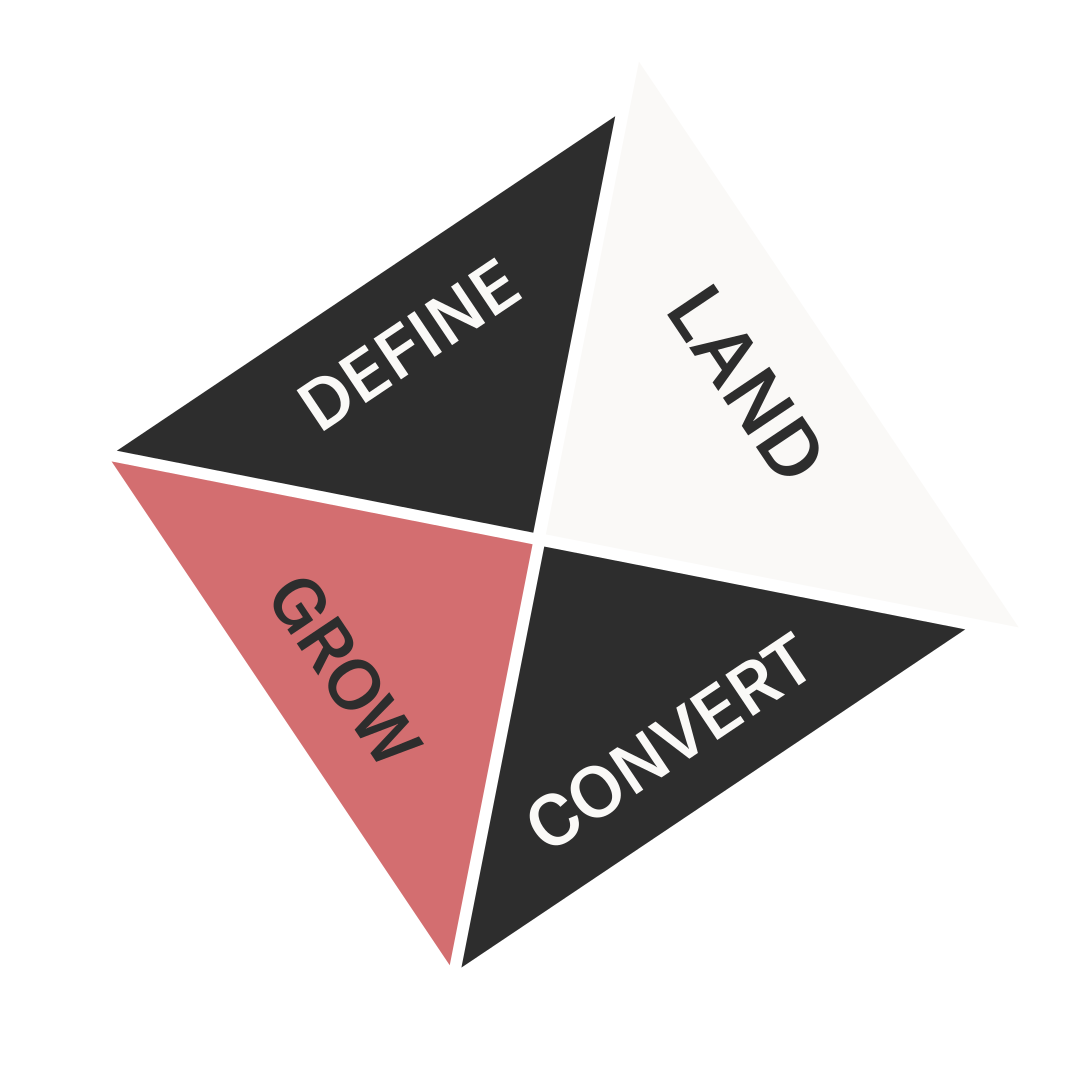
Within the marketing ecosystem, LAND is where your business is experienced. It turns strategy into structure, content, and user journeys that support confident decision-making. When this stage works properly, it strengthens the impact of search, content, and outreach, helping your website contribute directly to enquiry quality and sustainable growth.

Marketing Ecosystem highlighting Land: Website Design & CRO

DEFINE

Brand & Marketing Strategy

DEFINE gives your marketing direction. It clarifies positioning, strengthens credibility, and creates a shared framework that informs how your firm competes and grows.

EXPLORE

CONVERT

Discoverability & Lead Generation

Here we improve how your firm is found and chosen. It strengthens visibility, content, and credibility signals to support informed enquiries and consistent lead generation.

EXPLORE

GROW

Brand Growth Campaigns

GROW focuses on building long-term visibility, reputation, and engagement. It supports firms through strategic, compliant outreach that strengthens relationships with clients, referrers, and future talent.

EXPLORE

QUESTIONS

Frequently Asked Questions

When is the right time to invest in a new website or redesign?

The right time to invest in a new website is usually when your firm has outgrown what it currently has. This often happens quietly. Services expand, client expectations change, or the firm’s direction evolves, but the website remains largely the same.

Many firms reach this point when they notice a mismatch between the quality of their work and how it is presented online. The website may look acceptable on the surface, but it no longer supports clear decision-making. Services are hard to navigate, information feels thin or outdated, and enquiries don’t reflect the type of work the firm wants to attract.

It is also the right time when marketing activity begins to increase. As more effort is put into search, content, referrals, or outreach, weaknesses in the website become more visible. Without a strong foundation, that activity struggles to convert into meaningful enquiries.

A new website or redesign is most effective when it is approached proactively. Not because something is broken, but because the firm is ready to support growth, improve credibility, and make it easier for the right clients to choose them.

Do we need a full website rebuild, or can our existing site be improved?

That depends on how well your current website supports your firm’s objectives and how far it can realistically be adapted. In some cases, targeted improvements to structure, content, and user journeys can address specific issues without starting from scratch. This might include clarifying services, improving navigation, or refining how enquiries are guided and qualified.

However, there are situations where incremental changes are no longer effective. If the website is built on an unclear structure, lacks sufficient depth, or cannot support how the firm has evolved, a rebuild may be the more sensible option. This is particularly true when the site was originally created quickly, has grown without a clear plan, or no longer reflects the type of work the firm wants to attract.

The decision is not made on aesthetics alone. It comes from understanding how people are using the site, where they are getting stuck, and whether the current setup can support meaningful improvements. Reviewing analytics, content structure, and user behaviour helps determine whether the site can be improved or whether rebuilding will provide a stronger, more sustainable foundation.

The aim is always to recommend the most appropriate route, not the biggest one.

What does website design and CRO work typically involve?

Website design and conversion work focuses on how your website is planned, structured, designed, and experienced, rather than just how it looks. The aim is to ensure the site supports credibility, helps people understand your business clearly, and guides the right users towards making positive actions, i.e., making an enquiry, signing up to newsletters, etc.

This usually begins with understanding how your firm operates, who you want to attract, and how clients currently move through your website. From there, the work looks at site structure, service pages, content, and user journeys, identifying where information is unclear and where confidence is lost.

Design, content, and conversion are considered together. Visual design supports professionalism and trust, content explains your business accurately and responsibly, and journeys are shaped to help users assess suitability before they enquire. Analytics and user behaviour inform these decisions, so changes are based on evidence rather than assumptions.

The result is a website that works harder for your firm, attracting the right clientele, by helping them make informed decisions.

How much input is required from us during the project?

Your involvement is important, but it is kept proportionate and focused. I don’t expect firms to have everything prepared upfront, nor do I rely on you to drive the project. My role is to lead the process and make it as straightforward as possible.

Typically, your input is most valuable at the start and at key decision points. This might include initial conversations about your business and priorities, feedback on proposed structure or content, and sign-off at agreed stages. Where subject matter expertise is needed, such as confirming the accuracy of service descriptions, I’ll guide you on exactly what’s required.

Day-to-day delivery, coordination, and progress sit with me. That means you’re not pulled into unnecessary meetings or asked to review work without context. The aim is to respect your time while ensuring the website genuinely reflects your firm, your standards, and how you want to be understood.

Most clients find the process manageable alongside their existing workload, with clear expectations set from the outset.

Will you write the website content, or do we need to provide it?

In most projects, I write the website content as part of the service. This includes core pages, supporting content, and calls to action that explain your offering clearly and responsibly for trust-driven industries.

Content is written to support both decision-making and discoverability. That means it is structured and phrased in a way that helps the right people find your website through search, without compromising clarity, tone, or regulatory expectations

That said, I’m flexible in how content is handled. Some firms prefer to develop content in-house, particularly where internal knowledge, tone, or approval processes are already established. In those cases, I can work with your existing drafts to refine structure, improve clarity, and ensure the content supports the wider aims of the project.

Whether content is written by me, by your team, or collaboratively, the focus remains the same. Your website should help people understand your business, assess relevance, and feel confident about taking the next step.

How do you approach structure, user journeys, and calls to action?

My starting point is always your audience. In trust-driven industries, there is rarely a single type of visitor. Different audiences arrive with different needs, levels of understanding, and reasons for hesitation. Understanding who those audiences are, and what they are trying to resolve, is essential before structure or journeys are defined.

From there, I look at the common pain points and decision pressures each audience faces. This shapes how information is organised, what needs to be explained clearly, and where reassurance is most important. The aim is to create journeys that feel relevant and considered, rather than generic or one-size-fits-all.

Where analytics data is available, it is used to validate and refine this thinking. Behavioural data helps identify where people arrive, which pages they engage with, and where confidence is lost. This insight is combined with audience understanding to design journeys that better reflect how people actually move through the site.

Calls to action are then aligned to those journeys. They are positioned where a next step feels natural and informed for each audience, helping the right people move forward at the right moment, without pressure or confusion.

How do you ensure websites meet regulatory and professional standards?

Compliance is considered from the outset, not added on at the end. When working with firms in law, finance, and healthcare, the website needs to communicate clearly and responsibly while meeting the standards set by regulators and professional bodies.

This starts with how information is presented. Content is written to be accurate, proportionate, and clear, avoiding exaggerated claims or language that could be misleading. Your offering is explained in a way that helps people understand suitability and scope, rather than encouraging enquiries that are unlikely to be appropriate.

Structure and journeys also play a role. The way information is organised, how fees or processes are referenced, and where calls to action appear all influence how compliant and credible the website feels. These elements are shaped to reflect the expectations clients and regulators have of professional firms.

Throughout the project, I apply my experience of working in regulated sectors to sense-check content, layout, and messaging against relevant guidance. The aim is to ensure your website supports trust, protects your professional obligations, and allows your business to market itself with confidence.

How do you balance credibility, compliance, and CRO?

GDPR considerations are built into every website project as standard. This includes how personal data is collected through forms, how consent is handled, and how privacy information is presented, so users understand what happens to their data and why.

Accessibility, however, is not automatically built into most websites unless it is specifically considered. I can design and build websites with accessibility in mind, focusing on clear structure, readable layouts, and inclusive user journeys, but this is scoped deliberately rather than assumed.

Some firms choose to prioritise accessibility from the outset, particularly where they have public sector links, regulatory obligations, or a strong commitment to inclusivity. Others request it as an additional requirement once they understand what it involves and what level of compliance is appropriate for their business.

Where accessibility is important to you, we’ll discuss this early and agree the right level of support. This ensures expectations are clear and the website is designed responsibly, rather than relying on assumptions or partial fixes later on.

How much does a website design project typically cost?

The cost of a website design project depends on the scope of work and what the website needs to achieve. Factors such as the size of the site, the complexity of your offering, the amount of content required, and whether accessibility or ongoing support is included will all influence the final figure.

Some projects focus on restructuring and improving an existing website, while others involve a more comprehensive redesign to support growth, credibility, and enquiry quality. Because of this variation, I don’t use one-size-fits-all pricing.

Website projects are typically priced on a fixed fee, agreed in advance, so you have clarity on cost before any work begins. Where additional support is needed beyond the core project, such as ongoing optimisation or maintenance, this is discussed separately.

The aim is always to recommend an approach that is proportionate to your business, your objectives, and the outcomes you want the website to support.

How long does a website design project take?

Most website design and conversion projects take between three and six weeks, depending on scope, complexity, and how much content is involved. Smaller sites or targeted improvements can sit at the shorter end of that range, while more comprehensive builds naturally take longer.

Timelines are shaped by a few key factors. These include how much discovery is needed at the start, how many pages are involved, and how quickly feedback and approvals can be turned around. From the outset, I’ll set out a clear plan so you understand what happens when and where your input is needed.

Importantly, the process is paced to allow for considered decision-making. In trust-driven industries, rushing structure, content, or sign-off often creates problems later. The focus is on delivering a website that is robust, credible, and fit for purpose, rather than simply launching quickly.

If timing is critical, this can be discussed early so expectations are aligned and the approach adjusted where possible.

What kind of results should we expect from a new website?

A well-designed website should support better outcomes across the whole marketing journey, not just increase traffic. In practice, this often means quality, more relevant enquiries, improved confidence from prospective clients, and a more consistent flow of work that aligns with your priorities.

For many firms, the most noticeable change is enquiry quality. When information is structured clearly and your offering is explained properly, people arrive with a better understanding of scope, suitability, and next steps. This reduces time spent on unsuitable enquiries and helps conversations start at a more informed level.

Over time, a strong website also supports wider marketing activity. Search, content, referrals, and outreach work more effectively when they lead back to a site that reinforces credibility and guides decision-making. While results will vary depending on sector and activity, the aim is always the same: to help your website contribute meaningfully to growth rather than simply existing as an online presence.

How does a website actually improve lead quality, not just traffic?

A website improves enquiry quality by setting expectations before someone gets in touch. When your offering is explained clearly, your positioning is well defined, and information is easy to navigate, people can self-qualify before they make contact.

This reduces enquiries from people who are not a good fit, whether that’s because of budget, scope, or timing. Instead, the website attracts enquiries from people who understand what you do, why you do it, and whether it is right for them.

Structure and journeys play a key role here. By guiding users through relevant information in a logical order, the website helps them build confidence and clarity. Calls to action are then placed at points where users are informed enough to take the next step, rather than prompted too early.

The result is not necessarily more enquiries, but better ones. Conversations start at a higher level, internal time is used more effectively, and the website becomes an active filter rather than a passive contact point.

What happens after the website goes live?

Once the website is live, the focus shifts from delivery to performance. The site should be monitored to ensure it is functioning as intended, enquiries are coming through correctly, and users are engaging with the content in the way expected.

For some firms, this is where the project naturally concludes. They take ownership of the website with a clearer structure, stronger credibility, and improved enquiry pathways in place. Others choose to continue refining and improving performance over time.

Where ongoing support is needed, I can provide website maintenance to keep things secure and up to date, as well as periodic optimisation to respond to how users behave in practice. This might include small content refinements, journey improvements, or adjustments based on analytics and enquiry quality.

The aim after launch is simple. To ensure the website continues to support your business as it evolves, rather than standing still while expectations move on.

Do you offer ongoing website management and maintenance?

Yes. I offer an optional Website Management & Maintenance arrangement for firms that want their website kept secure, stable, and up to date after launch.

This covers the practical, ongoing tasks that help a website run reliably. That includes plugin and theme updates, SSL and PHP monitoring, uptime checks, and light fixes. I can also make small content changes each month, such as updating text, images with keyworded alt text, page titles, or menu items. Reasonable requests are accommodated within up to two hours per calendar month.

What this does not include is new pages, structural redesigns, or larger pieces of work. Anything outside the agreed scope is quoted separately, so expectations are clear.

The arrangement is priced at £100 per month, billed monthly, or £1,000 per year, which includes two months free. It’s designed to give peace of mind and continuity without locking firms into unnecessary ongoing commitments.